 By Abdul Aziz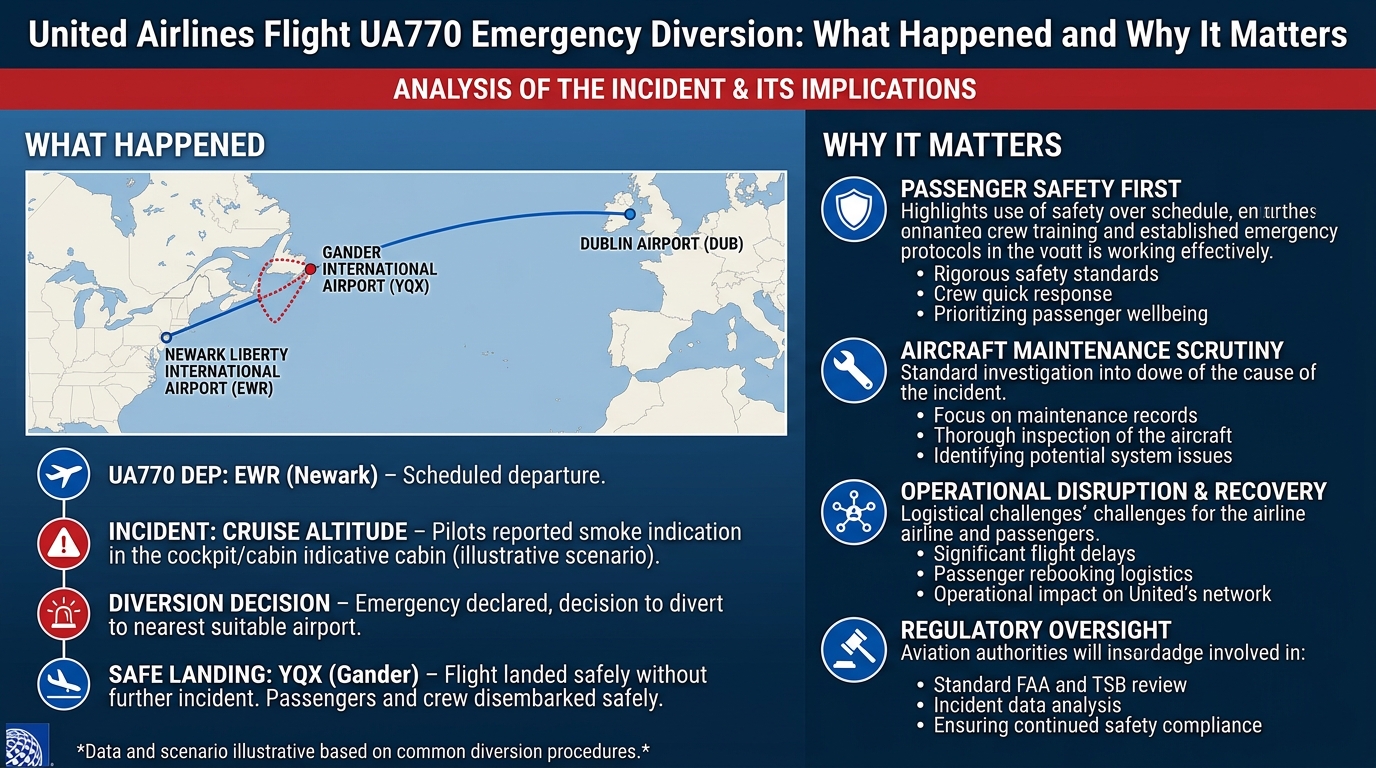
The United Airlines Flight UA770 emergency diversion became a widely discussed aviation incident after the aircraft declared an emergency and diverted from its planned route. While emergency diversions can sound alarming, they are often precautionary measures designed to ensure the safety of passengers and crew. In the case of UA770, the flight crew followed established aviation procedures, resulting in a safe landing without reported injuries. Reports indicate that the flight was operating from Barcelona to Chicago when it diverted to London Heathrow after an emergency declaration.
This article explores the timeline of the event, possible causes, passenger experiences, airline response, and the broader significance of emergency diversions in modern aviation.
Understanding the United Airlines Flight UA770 Emergency Diversion
The United Airlines Flight UA770 emergency diversion occurred during a transatlantic journey. According to aviation reports, the aircraft declared an emergency approximately 90 minutes after departure and changed course toward London Heathrow Airport. The crew transmitted the emergency code known as “Squawk 7700,” a universal signal used by pilots to indicate a serious onboard situation requiring priority handling from air traffic control.
Despite the emergency declaration, the aircraft landed safely, and all passengers and crew exited without injury. This demonstrates how aviation safety systems are designed to manage unexpected situations effectively.
Timeline of the United Airlines Flight UA770 Emergency Diversion
Departure from Barcelona
UA770 departed from Barcelona on a scheduled flight to Chicago. Weather conditions were reported to be normal, and the flight initially progressed without any known issues.
Emergency Declaration
During cruise altitude, the flight crew detected a potential issue that warranted immediate attention. As a precaution, they declared an emergency and transmitted Squawk 7700 to air traffic controllers.
Diversion to London Heathrow
After assessing available options, the pilots selected London Heathrow Airport as the diversion point. Heathrow’s extensive emergency response capabilities and maintenance facilities made it an ideal choice.
Safe Landing
The aircraft landed safely at Heathrow, where emergency services were on standby. No injuries were reported, and passengers were assisted by airline personnel following arrival.
Possible Causes Behind the United Airlines Flight UA770 Emergency Diversion
Cabin Pressurization Concerns
Several aviation reports suggest that a cabin pressurization warning may have prompted the emergency declaration. Pressurization systems are critical because they maintain a safe cabin environment at high altitudes. Any warning related to this system is treated seriously by flight crews.
Technical Precautions
Even if a warning does not indicate an immediate danger, pilots are trained to prioritize safety. Modern aircraft generate alerts that help crews identify potential problems before they become serious.
Importance of Early Decision-Making
Aviation experts often emphasize that declaring an emergency early can prevent larger complications. In this case, the diversion allowed the aircraft to land at a major airport with extensive support resources available.
What Is Squawk 7700?
Meaning of the Emergency Code
Squawk 7700 is a transponder code used by aircraft to indicate a general emergency. When pilots enter this code, air traffic controllers immediately recognize that the aircraft requires priority assistance.
How Air Traffic Control Responds
Once the code is transmitted, controllers coordinate with nearby airports and emergency services to ensure a safe and efficient landing. This process is a standard part of global aviation safety procedures.
Passenger Experience During the United Airlines Flight UA770 Emergency Diversion
Initial Reactions
Passengers often feel concerned when they hear terms such as “emergency diversion.” However, airline crews are trained to provide information and maintain calm throughout the process.
Cabin Crew Support
Flight attendants play a vital role during diversions. They communicate instructions, answer passenger questions, and prepare the cabin for landing if necessary.
Arrival Assistance
Following the landing, affected travelers typically receive support such as rebooking assistance, meal vouchers, accommodation arrangements, or alternative travel options depending on the circumstances. Reports indicate that United Airlines assisted passengers after the diversion.
Why London Heathrow Was Chosen
Strategic Location
London Heathrow is one of the world’s busiest international airports and serves as a major hub for long-haul flights.
Emergency Resources
The airport offers extensive emergency response capabilities, maintenance facilities, and passenger support services. These resources make it a preferred diversion airport for many transatlantic flights.
Operational Advantages
By diverting to Heathrow, the airline could quickly coordinate inspections, repairs, and passenger accommodations while minimizing disruption.
Aviation Safety Lessons from the United Airlines Flight UA770 Emergency Diversion
Safety Comes First
The incident highlights the aviation industry’s commitment to safety. Pilots are encouraged to act conservatively when potential technical concerns arise.
Training and Procedures Work
The successful outcome demonstrates the effectiveness of pilot training, aircraft systems, and emergency response protocols.
Modern Aircraft Technology
Today’s commercial aircraft include advanced monitoring systems that alert crews to abnormalities. These systems help crews make informed decisions before issues escalate.
How Emergency Diversions Affect Airlines
Operational Costs
Emergency diversions can result in significant expenses, including fuel costs, maintenance inspections, passenger accommodations, and schedule disruptions.
Reputation Management
Airlines must communicate clearly with passengers and the public following an incident. Transparent communication helps maintain customer trust.
Regulatory Review
After an emergency diversion, airlines often conduct inspections and reviews to identify the cause and ensure continued safety compliance.
Conclusion
The United Airlines Flight UA770 emergency diversion serves as an important example of how aviation safety systems function in real-world situations. While emergency declarations can sound alarming, they are often precautionary actions intended to protect everyone onboard. Reports indicate that UA770 diverted safely to London Heathrow after the crew declared an emergency and requested priority handling. All passengers and crew reportedly arrived safely, underscoring the effectiveness of modern aviation procedures and safety protocols.
Ultimately, the event demonstrates that quick decision-making, advanced aircraft technology, and coordinated emergency responses remain key pillars of safe air travel.